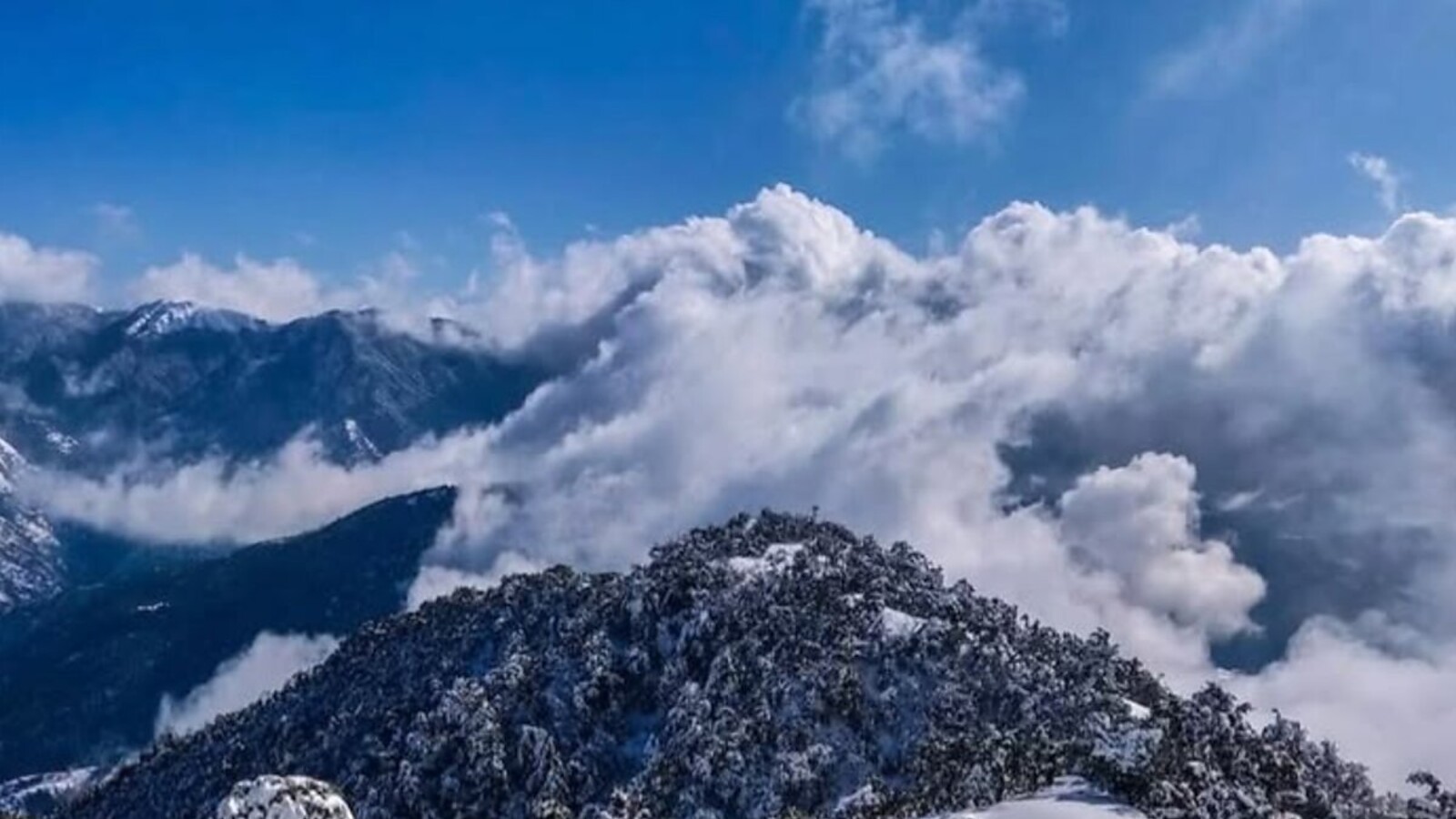
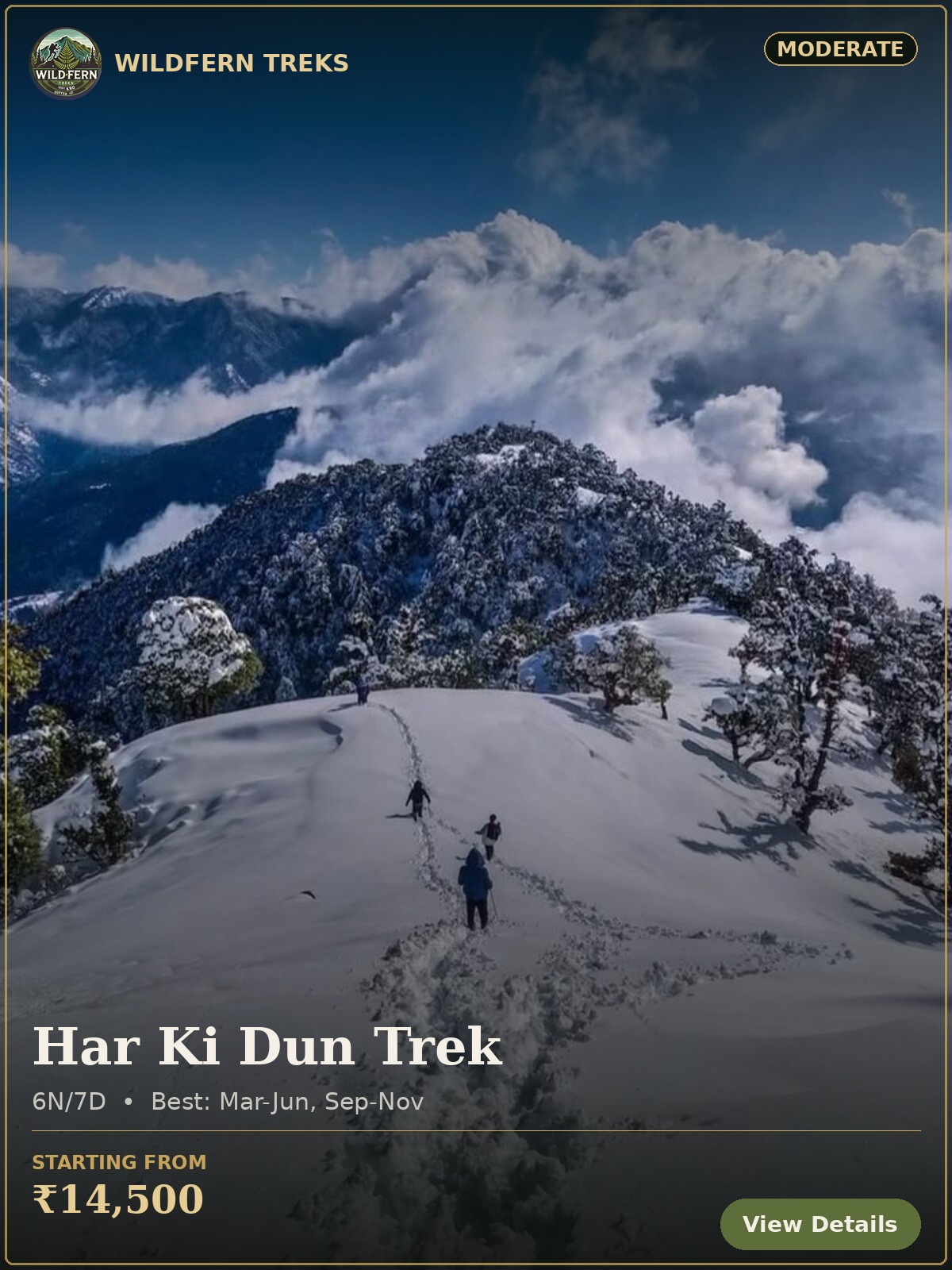
Har Ki Dun Trek
A wide Himalayan valley of ancient villages, alpine meadows, and Swargarohini's peaks — the mythic route the Pandavas are said to have walked to heaven.
Overview
Har Ki Dun means "Valley of Lord Shiva," and it's one of the Himalaya's most storied trails — local legend holds that this was the route the Pandavas walked on their final journey to heaven via Swargarohini peak. Osla, one of the villages along the way, holds one of India's few temples dedicated to Duryodhana.
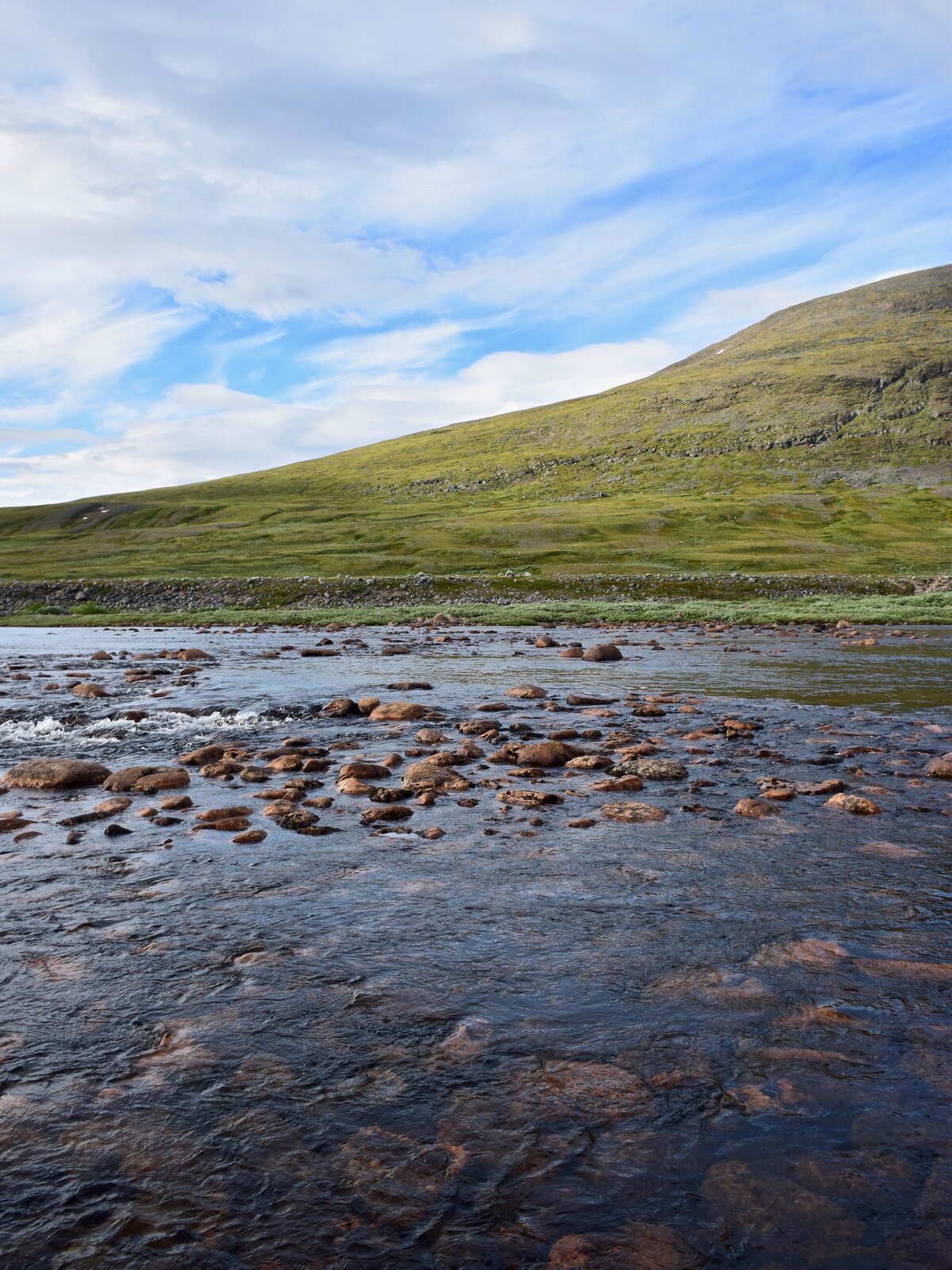
The route runs from Sankri through Taluka and the wooden-house village of Osla, climbing steadily through forest and meadow to the wide alpine valley of Har Ki Dun itself, ringed by the Swargarohini and Black Peak ranges — with the Jaundhar Glacier a short detour further up.
Itinerary
Things to Carry
- Trekking shoes (ankle support, broken-in)
- 4–5 layers incl. thermal + down jacket
- Waterproof gloves & woolen cap
- UV-protection sunglasses
- Headlamp/torch with spare batteries
- 1–2L water bottle + electrolytes
- Daypack (40–50L) with rain cover
- Trekking pole (recommended)
- Sunscreen & lip balm (SPF 40+)
- Personal medication + basic first aid
- Power bank
- Government-ID for permits
What's Included
Included
- All entry permits, forest fees & camping charges
- All meals during the trek (vegetarian, hygienically prepared)
- Accommodation per itinerary (tents/camps/guesthouses)
- Experienced trek leader & local support staff
- First-aid & basic emergency equipment
- Shared camping infrastructure
- All applicable taxes
Not Included
- Transport to/from Dehradun (unless specified)
- Personal trekking gear — see checklist above
- Personal expenses & tips
- Travel insurance
- Costs from itinerary changes due to weather/roadblocks
Gallery
Har Ki Dun FAQs
Yes — it's rated easy to moderate and is one of the most accessible multi-day Himalayan treks, suitable for children above 8–10 years with reasonable fitness. The trail is well-defined with a gradual altitude gain.
April to June for spring wildflowers and clearing snow, or September to November for golden autumn colour and the clearest mountain views. Avoid the June–August monsoon window.
Summer daytime temperatures reach a pleasant 20°C, dropping to around 5°C at night. In shoulder-season autumn, nights can drop below freezing at the higher campsites — layering is still important.
Booking amount is non-refundable once a trek is confirmed. Cancel 30+ days before departure: 50% refund. 15–30 days before: 25% refund. Within 15 days: no refund. If Wildfern cancels a trek, you get a full refund or a free transfer to a future batch.